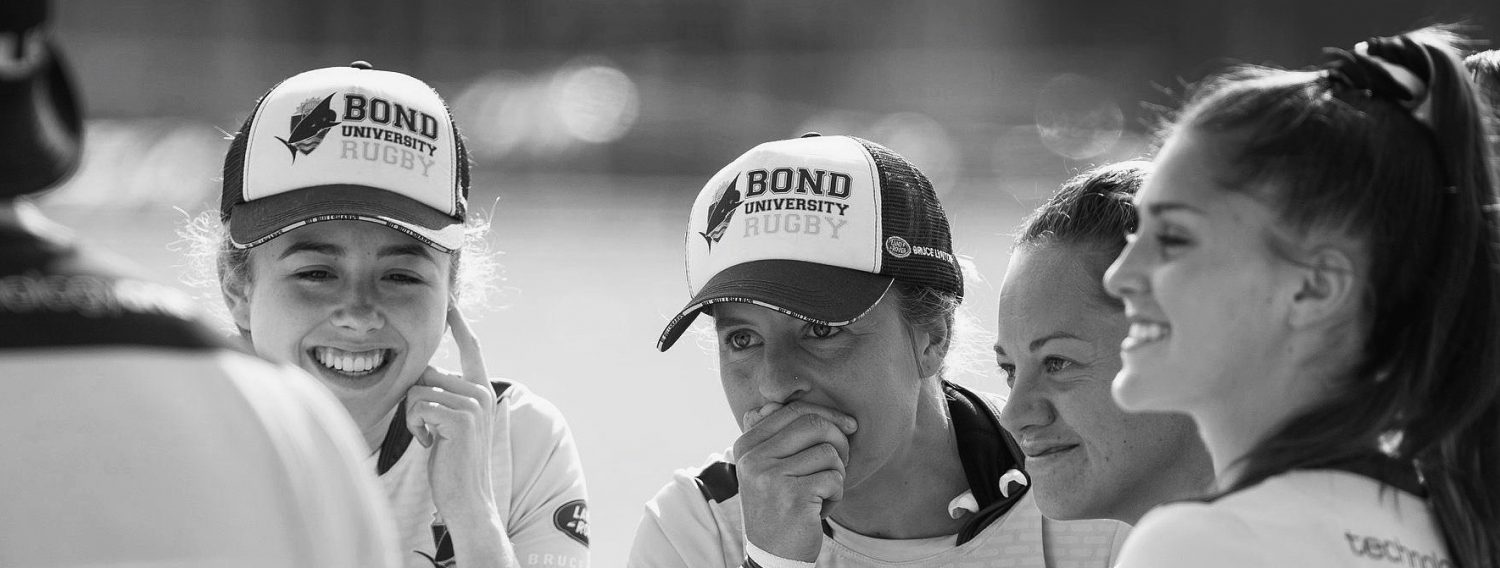
Sport has had an incredible impact upon my life, as my fondest memories and proudest moments have come from my participation within various sporting codes. With future aspirations and desires to be a part of the sports media industry, it is my vision and ambition to one day be considered a professional, regardless whether it is on or off the field.
One area of the industry that has prospered from unfavourable beginnings is the development of women’s sports. Although there is still much improvement needed to achieve the standard of “equal rights, equal pay and equal recognition” (Pavlovich, 2016) for women in the industry, this will only be accomplished as the global common is strengthened and supported. Consequently, the continued growth is not promised but can be influenced by women as an entity advocating for change through the facilitation of technology.
How we Participate as the Audience?
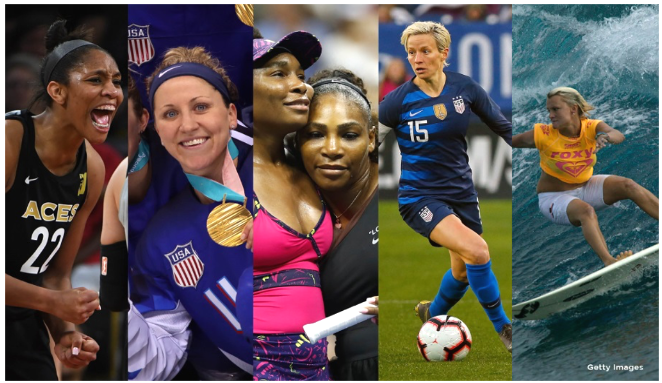
“It now seems to be a truth universally acknowledged that a new age of participatory media is changing the world” (Starobin, 2009). Not only is this form of media impacting globally, but it is the facilitator for consumer within the industry of professional sports. So how does this look for our women?
The audience base for women varies, with supporters from the youth through to the elderly. Noticeably that regardless of age, each individual shares the common denomination, that the overall engagement is what internet entrepreneur Ross Mayfield (2006) considers to be at the “low threshold” end of the collective intelligence and participation graph. This means that the interactivity of the audience is limited to the elements of reading and commentary on women’s sport with the possible subscription to club memberships, online streaming and the social media accounts of athletes and teams. Unfortunately, this level of engagement is not enough for stakeholders and corporate companies to consider investing in woman’s sport. As only “23% of female internet users” (Global Web Index, 2019) are watching women’s sport, these statistics can suggest that to achieve equal recognition it must start from women supporting each other, investing in the facets of their industry to drive equal rights.
Why Networking is Crucial for Women
“Social-networking sites” impressive growth has attracted much attention because the sites have made people’s personal relationships more visible and quantifiable than ever before. They have also become important vehicles for news and channels of influence” (The Economist , 2010).
To the benefit of women’s sports, social networking has enabled the connection between the athletes and supporters across numerous sporting codes. As the various networking applications are highly accessible with minimal barriers, this creates the opportunity to improve collective intelligence and participation levels in women’s sports.
The Instagram account https://www.instagram.com/sportswomenaustralia/ have utilised their platform to build upon the successes of females in sport. It showcases the history and significance of how women have impacted to forever change the way that professional sports have and will be played. This account is one of many that is subconsciously advocating for women, in that the greater impact lies not only within what they post but to promote and expand the industry through social media. Thus, proving that social networking is imperative to ensure the aid and support of women being seen as crucial to the sporting industry.

The Divide of Women’s Sports
There is a limiting factor to what could be seen as the digital divide within the industry of women’s professional sports. As a business, it is one that lacks the integration of policy, people and technology to promote development and growth. There has been no ability for an individual to yet have an “uncritical euphoric stance” (Rogers, 1986) towards female professional sports, as it has not been commercialised or substantially invested in by sponsors in comparison to men.
“Women’s sport has intangible association value. Around eight-in-ten (78%) female sports fans say it is important for sponsors to support women’s sport; and 74% say companies involved in sponsoring sport gain an appeal with the audience” (Perry, 2019).These statistics can suggest that it is crucial for the managing marketers across all women’s sports to drive investors to contribute, as not only will the business or company itself benefit but this also supports the efforts to minimise gender inequality.

Securing our Sports
“There is now a new medium of communications that [not] only changes the way we innovate and create goods and services — it can change the way societies create public value” (Tapscott, n.d.). The sporting industry offers to provide a public service of entertainment, a service that allows sport to be viewed and experienced as high quality and value for money. Thus, it needs to be protected for what it is worth.
“In the sport industry, intellectual property rights are rampant because they apply to teams, sponsors, athletes and even discrete event” (Onofry, n.d.). This warrants the ability for the commercial enterprises to make profits from their sport and to take legal action for any unlawful practice in regard to their game. This ensures that all commercial enterprises and athletes are bound to reserving the intellectual property of their sport.
Trademarking and intellectual property rights are as prominent in women’s sports just as it is in men’s sports. As previously stated, the sporting industry will invest in these law binding contracts to ensure successful longevity, thus women’s sport will continue to gain from this for years to come.
Women in Roles of Glory
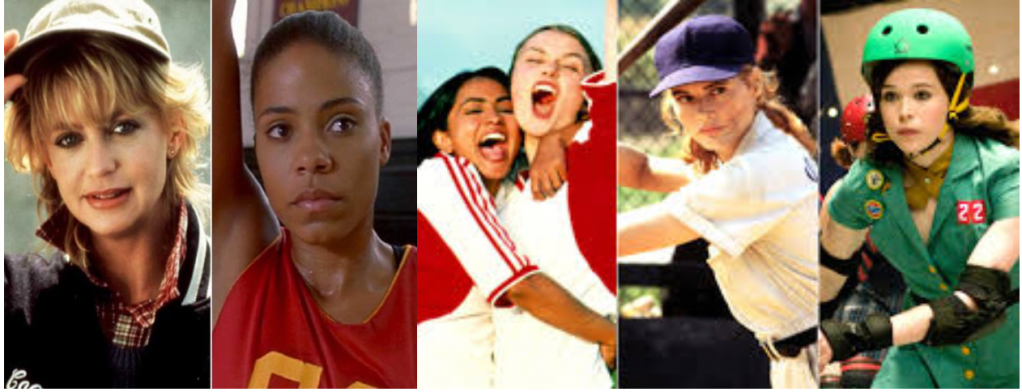
Movies have empowered the storyline of women and their impact in sport. This can be regarded to what is known to be the transmedia storytelling of the industry. Transmedia storytelling in its most simplest form “… represents a process where integral elements of a fiction get dispersed systematically across multiple delivery channels for the purpose of creating a unified and coordinated entertainment experience” (Jenkins, 2007). This process has provided the production and delivery of movies such as “A League of their Own” and “Bend it Like Beckham”. These storylines have broadcasted to the world that women are capable to play the lead, justifying the contributions that they bring to any game in any sport. Consequently, the movie industry has made small strides to close any form of gender inequality through the facilitation of female lead roles in sporting movies as it was an industry that was once only dominated by men.
Impact of Technological Advances for Women’s Sport
Gamification can be understood to be the “ … societal adoption and institutionalization of video games and the influence games and game elements have in shaping our everyday life and interactions” (Deterding, Dixon, Khaled, & E. Nacke, 2011). The gamification of professional sports can be seen to be represented by eSports.
The online competition of gaming, known as eSports, brings gamification and augmentation factors of real sports into a digital format. The eSports industry is yet to implement the programming of female characters in sporting versions. However, there is a representation of women who are playing these games as competitors.
This is a forever growing and developing industry and as technology changes this enables continual alterations and improvement to the resolution and programming of these games. As times progresses it can only be expected that women will be included as characters within the games. This promoting yet another avenue to expand the female sport industry to gain further engagement and thus further recognition.

Is Globalisation Helping Women’s Sports?
“Modern sport is bound up in a global network of interdependency chains that are marked by global flows and uneven power relations” (Maguire). To simplify this, globalisation enables every facet of sport to be interconnected. The marketing of brands, athletes and teams promotes the stakeholders and sponsors to continue to invest in the industry.
The globalisation of sport is yes, developed, but in regard to women it is yet to be complete. Through exploiting every facet and encouraging the improvement in engagement, this will enable the industry of women’s sport to be equally recognised and thus receive the equal rights on a world scale.
The Direction of Women’s Sport
“ .. Women’s sport is growing and this is an indicator of future success. There are now seven professional women’s sports leagues, five of which have been established in the past five years. As popularity continues to increase, it’s inevitable that both brands and rights holders have questions about audience, engagement, opportunities and return-on-investment attached to women’s sport” (Perry, 2019).
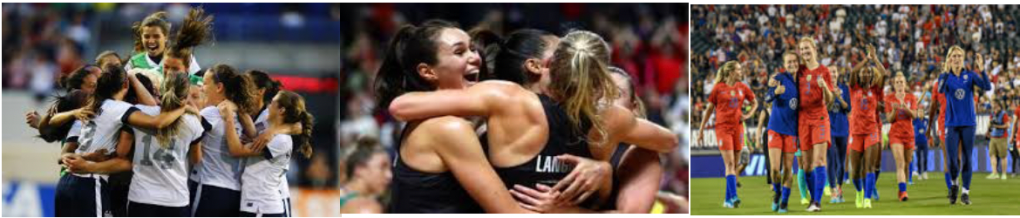
This suggests that women’s sport is only going to continue on an upward trend. The areas that have been addressed have both positive and negatives influences determining the level of engagement in the industry. If these factors are appropriately addressed this can ensure that continued support of female athletes receiving equal rights, equal pay and equal recognition achieved for their contribution in sport.
 Miah's Blog